Greensat
Sustainable Nanosatellite Network for Large Scale Environmental Monitoring Based on Next
Project Overview
Funding Program:Grüne Gründungen.NRW (ERDF/JTF Program NRW 2021-2027)
Project Duration:February 1, 2026 – January 31, 2029
Funding Authority: Ministerium für Umwelt, Naturschutz und Verkehr des Landes Nordrhein-Westfalen
Satellites have become an essential part of modern society. They enable accurate weather forecasting, environmental monitoring, climate protection, global connectivity, and emerging technologies such as autonomous mobility. Nanosatellites and CubeSats represent one of the fastest-growing segments of the global space industry.
When deployed as satellite constellations, CubeSats can perform many of the same missions as large monolithic satellites while offering significantly lower development costs, shorter production cycles, greater flexibility, and improved scalability. Their standardized architecture also enables industrial mass production, making space infrastructure more affordable and accessible.
According to the joint position paper “Key Component: Small Satellites” published by VDI (German engineering association) and BDI (Federation of German Industries), the global space economy is expected to grow dramatically over the coming decades. The market is projected to increase from approximately USD 360 billion in 2018 to as much as USD 2.7 trillion by 2040. The report emphasizes that small satellites are a strategic technology for Germany’s future competitiveness and calls for a strong market-driven initiative to expand domestic manufacturing capabilities.
While significant research efforts are currently addressing the reduction of space debris, the environmental impact of satellite manufacturing itself has received far less attention. The carbon footprint associated with material production, manufacturing processes, and transportation into orbit remains an important challenge for the next generation of sustainable space systems.
Vision
The vision of GreenSat is to establish a sustainable nanosatellite constellation dedicated to environmental protection and climate resilience.
By providing a cost-effective and agile IoT satellite network, GreenSat will enable regional authorities, research institutions, and industrial partners to build predictive environmental management systems capable of continuously monitoring environmental changes on a global scale.
The project lays the technological foundation by developing an innovative, highly resource-efficient CubeSat platform that serves as the backbone of this future satellite network.
Project Objectives
The primary objective of GreenSat is the development of a sustainable CubeSat platform for a satellite communication network capable of collecting data from terrestrial IoT-based environmental sensors. The collected information will enable the creation of a Digital Environmental Twin that continuously monitors ecosystems, detects environmental and climate changes at an early stage, and supports the prediction of natural hazards such as heavy rainfall and flooding events.
For satellite communication, the project utilizes LoRaWAN (Long Range Wide Area Network) technology. This ensures seamless integration with existing terrestrial IoT infrastructures while enabling energy-efficient, long-range data transmission from remote sensor networks.
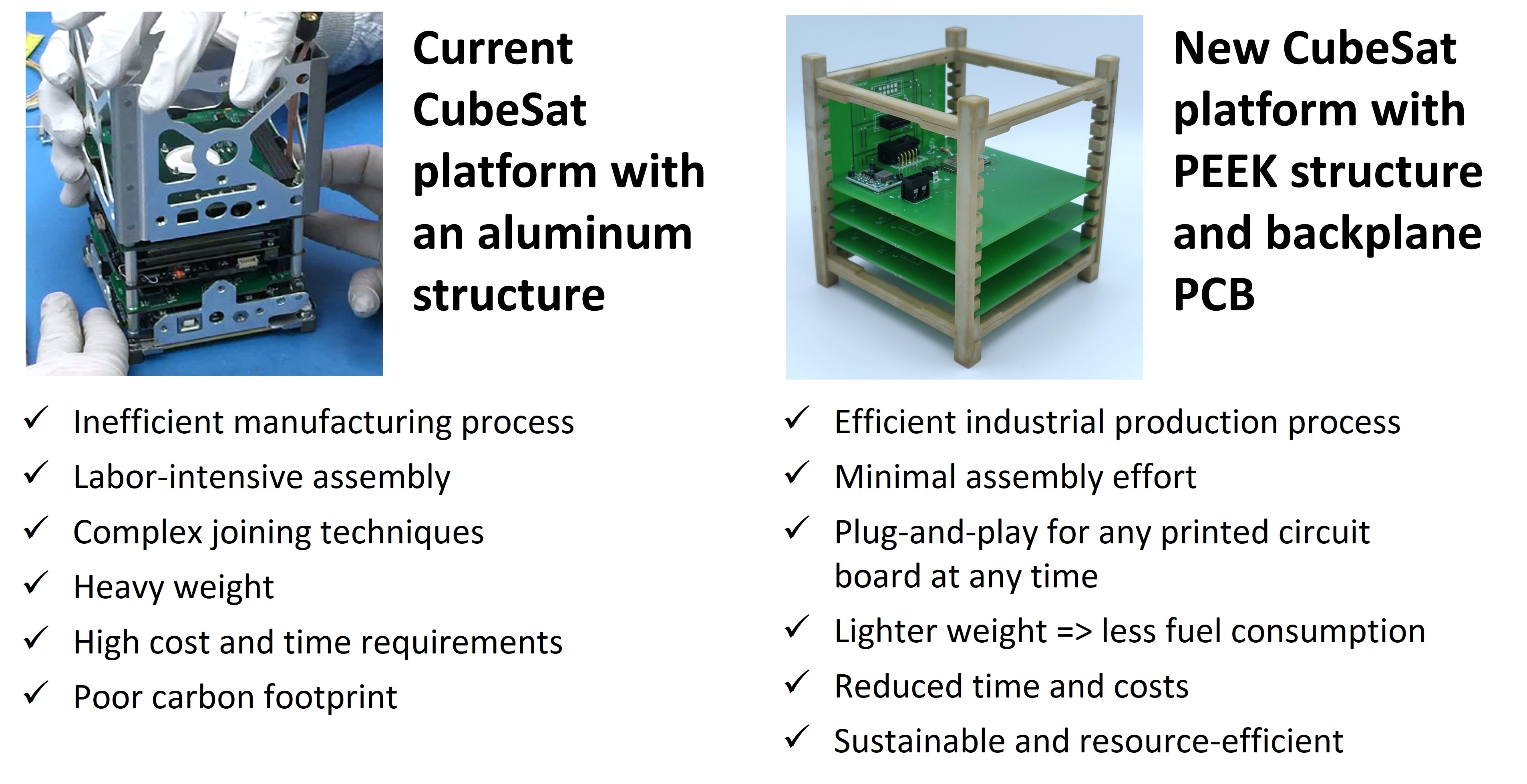
To minimize the environmental impact of satellite production and operation, GreenSat develops, prototypes, and validates a novel CubeSat bus with a significantly reduced carbon footprint. The platform also addresses current supply-chain challenges by reducing dependence on conventional metallic structures and specialized space-qualified electronic components.
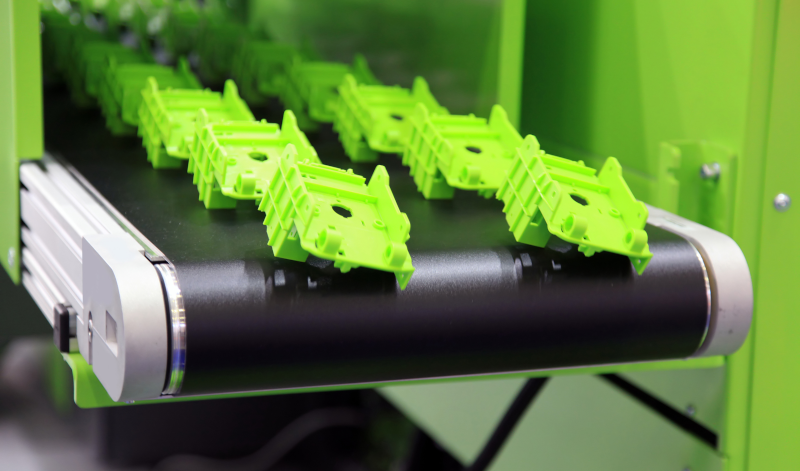
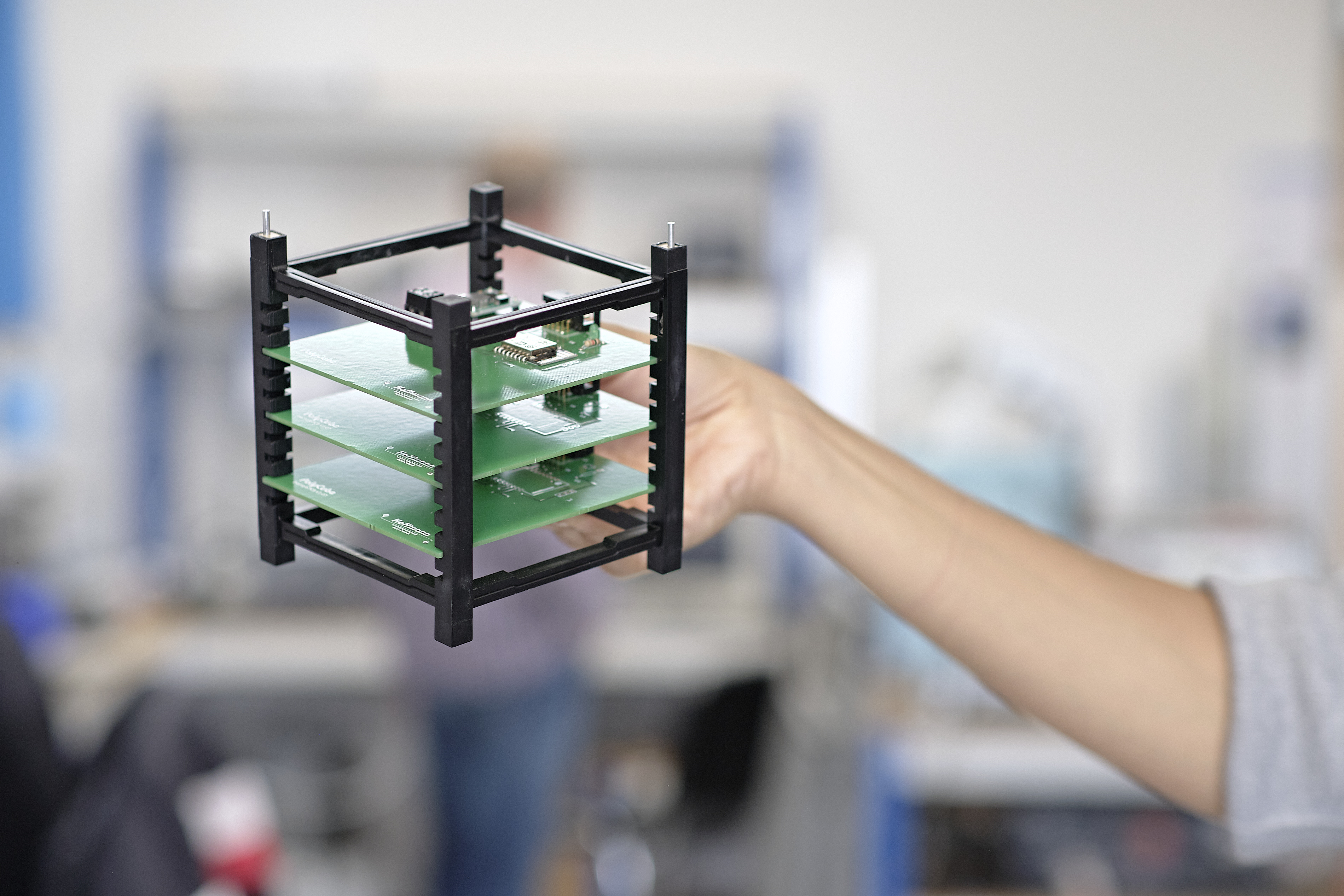
The polymer-based CubeSat bus introduces an entirely new system architecture featuring slide-in structural rails and a backplane electronics concept, enabling simplified assembly, modular integration, and scalable manufacturing. Furthermore, the platform is designed around industrial production principles and makes extensive use of Commercial Off-The-Shelf (COTS) components, reducing both costs and development time while increasing sustainability and manufacturability.
This innovative approach provides the technological basis for future large-scale CubeSat constellations that combine high performance with environmental responsibility and industrial scalability.
Founded by: